
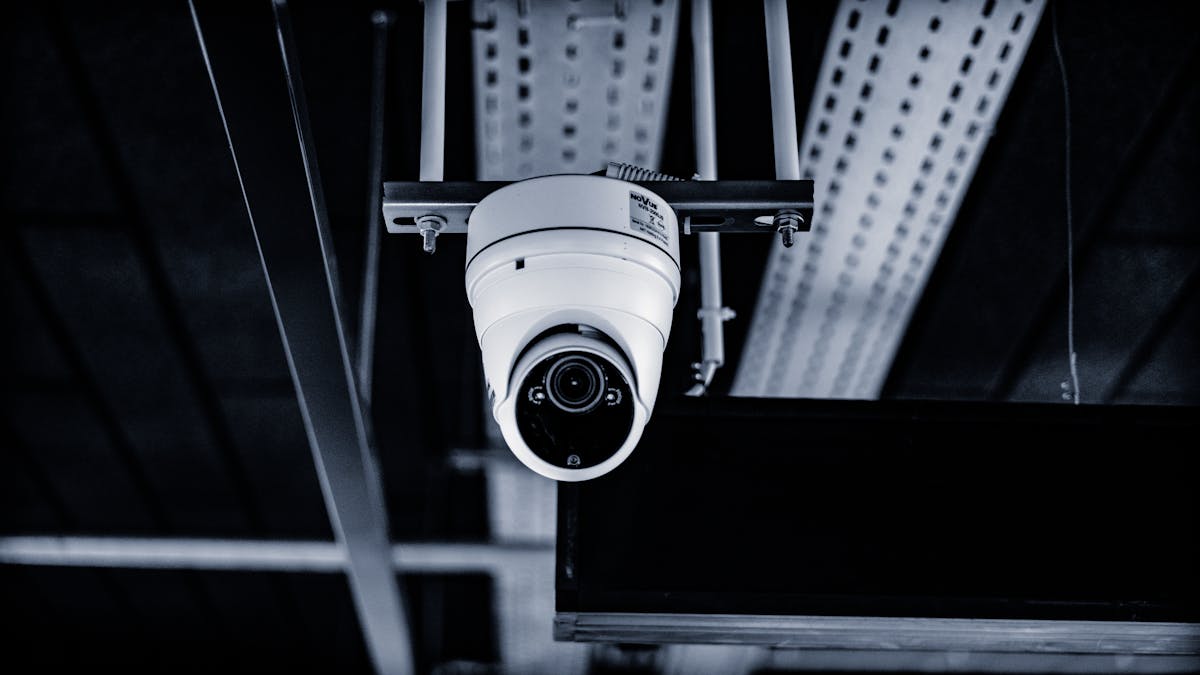

IP cameras and analog CCTV cameras represent two fundamentally different generations of surveillance technology, and the right choice depends on whether you need high-resolution smart features or a budget-friendly legacy system. IP (Internet Protocol) cameras capture and transmit digital video over a network, supporting resolutions from 2MP to 32MP with built-in analytics. Analog CCTV cameras convert video to analog signal transmitted over coaxial cable to a DVR, typically maxing out at 8MP (4K) with newer HD-analog formats. This comparison examines resolution, features, infrastructure requirements, and total cost of ownership so you can make an informed decision. For properties ready to upgrade from analog, a professional installer can plan a seamless migration to IP without losing existing coverage.
What Is an IP Camera?
An IP camera (Internet Protocol camera) is a digital surveillance device that captures video, compresses it on-board, and transmits the data as network packets over Ethernet (wired) or WiFi (wireless) to an NVR, cloud server, or video management software. Each IP camera functions as an independent network device with its own IP address, processor, and embedded operating system.
IP cameras emerged in the late 1990s with Axis Communications releasing the first commercial model in 1996. The technology became the industry standard for new installations by the mid-2010s, and today IP cameras account for over 70% of the global video surveillance market by revenue.
How IP Cameras Work
IP cameras contain an image sensor (CMOS), an on-board processor (SoC), and a network interface. The image sensor captures light and converts it to digital data. The processor compresses the raw video using H.265, H.264, or MJPEG codecs, then transmits the compressed stream as IP packets over the local network.
Most IP cameras connect via PoE (Power over Ethernet), receiving both power and data through a single Cat5e/Cat6 cable. The video stream is received by an NVR (Network Video Recorder), which stores footage on internal hard drives. Alternatively, the stream can be sent to cloud storage or accessed directly through a web browser or mobile app.
Advanced IP cameras include on-board AI processing for person detection, vehicle detection, facial recognition, line-crossing alerts, and license plate recognition — all processed at the camera level before sending relevant clips to the recorder.
Key Advantages of IP Cameras
- Superior resolution — Available in 2MP (1080p), 4MP, 5MP, 8MP (4K), 12MP, and up to 32MP for specialized applications
- On-board analytics — AI-powered person/vehicle detection, facial recognition, and object classification reduce false alerts by 90%+ compared to simple motion detection
- Digital zoom with detail — Higher megapixel counts allow meaningful digital zoom without pixelation
- Two-way audio — Built-in microphones and speakers enable communication through the camera
- PoE power and data — Single Ethernet cable simplifies installation and reduces material costs
- Flexible storage options — Record to NVR, cloud, on-board microSD, or FTP server
- Remote configuration — Every setting adjustable remotely via web interface or mobile app
- Encryption support — TLS/SSL and SRTP encryption protect video streams from interception
Key Limitations of IP Cameras
- Higher per-camera cost — Quality IP cameras range from $100-$500+ per unit, compared to $30-$100 for analog
- Network bandwidth consumption — A single 4K IP camera at 30 fps uses 8-16 Mbps; large deployments require managed network infrastructure
- Cybersecurity exposure — Network-connected cameras are vulnerable to hacking if not properly secured with firmware updates, strong passwords, and network segmentation
- Latency — IP video processing and network transmission introduce 0.5-2 seconds of delay in live view
- Storage demands — Higher resolution footage requires significantly more storage — a 4K camera generates 30-50 GB per day with continuous recording
- Complexity — Network configuration, IP addressing, and firmware management require IT knowledge or professional installation
What Is an Analog CCTV Camera?
An analog CCTV (Closed-Circuit Television) camera is a surveillance device that captures video and transmits it as an analog electrical signal over coaxial cable (typically RG59 or RG6) to a DVR (Digital Video Recorder) for processing and storage. The DVR converts the analog signal to digital format for recording, playback, and remote viewing.
Analog CCTV has been the backbone of video surveillance since the 1970s. While traditional analog was limited to 720×480 resolution (D1), modern HD-analog formats — including HD-TVI, HD-CVI, AHD, and HD-SDI — support resolutions up to 4K (8MP) over coaxial cable, extending the useful life of analog infrastructure.
How Analog CCTV Cameras Work
Analog cameras contain an image sensor and a basic signal processor that converts the captured image to a continuous analog video signal. This signal travels over coaxial cable to a DVR, where an analog-to-digital converter (ADC) digitizes the video for compression, storage, and remote access.
Power is delivered separately, typically through a dedicated 12V DC or 24V AC power cable running alongside the coax, or through a PoC (Power over Coax) adapter. The DVR assigns recording schedules, manages motion detection (processed at the DVR, not the camera), and provides remote viewing through a companion app or web interface.
HD-analog formats (HD-TVI, HD-CVI, AHD) were introduced between 2013-2015 to bring megapixel resolution to existing coaxial infrastructure. These formats transmit uncompressed or lightly compressed video over standard RG59 coax at distances up to 500 meters (1,640 feet) — significantly farther than Ethernet’s 100-meter limit without repeaters.
Key Advantages of Analog CCTV Cameras
- Lower camera cost — HD-analog cameras range from $30-$100 per unit, significantly cheaper than comparable IP models
- Long cable runs — Coaxial cable supports transmission distances up to 500 meters (1,640 feet) without repeaters
- Simpler setup — No network configuration, IP addressing, or bandwidth management required
- Minimal latency — Analog signal transmission is nearly instantaneous, with less than 0.1 seconds of delay
- Legacy infrastructure reuse — Existing coaxial cable from older systems can be reused for HD-analog upgrades
- No cybersecurity risk from the cameras — Closed-circuit analog signals are not accessible over the internet at the camera level
- Proven track record — Decades of reliability in demanding commercial environments
Key Limitations of Analog CCTV Cameras
- Resolution ceiling — Maximum 8MP (4K) with HD-analog formats; no path to 12MP or higher
- No on-board analytics — All motion detection and video analysis must be performed at the DVR
- Dual cabling — Traditional analog requires separate power and video cables unless using PoC adapters
- Limited audio support — Most analog cameras lack built-in microphones; audio requires separate cable runs
- Signal degradation — Analog signals degrade over distance and are susceptible to electromagnetic interference
- DVR processing bottleneck — The DVR handles all encoding, limiting how many cameras can record at full resolution simultaneously
- Declining manufacturer support — Major manufacturers are shifting R&D investment toward IP, reducing future analog innovation
IP Cameras vs Analog CCTV — Side-by-Side Comparison
| Factor | IP Cameras | Analog CCTV |
|---|---|---|
| Installation Complexity | Moderate — requires network infrastructure and PoE switch configuration | Low to moderate — straightforward coax and power cable routing |
| Video Quality | 2MP to 32MP with AI-enhanced imaging, WDR, and smart IR | Up to 8MP (4K) with HD-analog formats; basic WDR and IR |
| Reliability | High — dependent on network health and PoE switch uptime | Very high — simple signal path with fewer points of failure |
| Cost Upfront | $150-$500+ per camera installed | $60-$200 per camera installed |
| Cost Ongoing | Firmware updates; potential cloud storage fees | Minimal — DVR hard drive replacement every 3-5 years |
| Scalability | Highly scalable — add PoE switch ports and NVR storage as needed | Limited by DVR channel count (typically 4, 8, 16, or 32) |
| Best For | New installations, properties needing analytics, high-security sites | Budget-conscious upgrades, existing coax infrastructure, simple monitoring |
Cost Comparison — IP Cameras vs Analog CCTV
| Cost Category | IP System — 8 Cameras | Analog CCTV — 8 Cameras |
|---|---|---|
| Cameras | $800-$2,400 | $240-$800 |
| Recorder (NVR / DVR) | $250-$600 | $150-$350 |
| PoE Switch / Power Supply | $80-$200 (PoE switch) | $40-$80 (centralized power supply) |
| Cabling | $100-$250 (Cat5e/Cat6) | $80-$200 (RG59 Siamese cable) |
| Professional Installation | $600-$1,600 | $400-$1,000 |
| Hard Drive (4TB) | $80-$120 | $80-$120 |
| Total System Cost | $1,910-$5,170 | $990-$2,550 |
IP systems cost approximately 60-100% more than analog for equivalent camera counts. For detailed pricing at every camera count, see our security camera installation cost guide. However, the price gap closes when factoring in IP cameras’ superior resolution, built-in analytics, and reduced false alarm rates — features that would require expensive add-on hardware in an analog system.
Which Is Better for Homes?
IP cameras are the recommended choice for new residential installations. Homeowners benefit from 4K+ resolution for identifying faces and license plates, smartphone integration with AI-powered alerts, and two-way audio for communicating with visitors and delivery drivers. The per-camera cost premium over analog is offset by richer features and future-proof technology.
Analog CCTV remains a reasonable option for homeowners with existing coaxial wiring who want a basic upgrade without re-cabling. Replacing an old analog system’s cameras and DVR with HD-TVI or HD-CVI equipment delivers 4K resolution over the same coax cables, keeping costs under control.
Explore residential camera options in our guide to home security camera installation packages and pricing.
Which Is Better for Businesses?
IP cameras are the clear standard for commercial installations. Businesses need on-board analytics for loss prevention, person counting, perimeter detection, and license plate recognition — capabilities only available with IP technology. IP systems also integrate with access control, alarm panels, and POS systems through open standards like ONVIF.
Analog CCTV serves businesses with tight budgets and basic monitoring needs — small retail shops, storage units, or warehouses where simple recording and playback suffice. Businesses with large existing coaxial cable plants may also choose HD-analog to avoid the cost of re-cabling during a system upgrade.
Read our detailed guide on commercial security camera installation for businesses.
Which Should You Choose? (Decision Framework)
Choose IP Cameras If…
- You are building a new security system from scratch with no existing cabling
- You need resolution above 8MP or plan to future-proof for higher resolutions
- AI-powered analytics (person/vehicle detection, facial recognition) are important for your security goals
- You want two-way audio, on-camera storage, and advanced remote management features
- Your property has reliable network infrastructure or you are willing to invest in it
- Integration with access control, alarms, or business software is required
- You need encryption and cybersecurity compliance for regulated industries
Choose Analog CCTV If…
- You have existing coaxial cable infrastructure in good condition and want to minimize re-cabling costs
- Your budget is limited and basic 1080p-4K recording meets your needs
- Simple setup without network configuration is preferred
- You need cable runs exceeding 100 meters (328 feet) without repeaters
- Cybersecurity exposure is a concern and you prefer a closed-circuit system
- The installation serves a straightforward monitoring purpose without advanced analytics
When to Use Both Together
Hybrid DVRs accept both analog and IP camera inputs, enabling a phased migration from analog to IP. Properties with existing coaxial infrastructure can keep functioning analog cameras while adding IP cameras at new locations or upgrading high-priority positions. This approach spreads the cost of migrating to IP over months or years without sacrificing coverage during the transition.
A professional installer can audit your existing system and create a migration plan that preserves your coax investment while adding IP capabilities where they matter most.
Get Expert Advice — Free Consultation
The IP-versus-analog decision involves assessing your existing infrastructure, coverage requirements, feature needs, and budget constraints. Our certified installers inspect your property, evaluate existing cabling, and recommend the most cost-effective path to a modern surveillance system — whether that means full IP, HD-analog, or a hybrid approach.
Schedule a free consultation to get a professional assessment and a detailed quote tailored to your property.
Professional Installation for IP Camera Systems
IP camera installation requires network planning, PoE switch configuration, NVR setup, and camera commissioning. Professional installers design the network architecture to prevent bandwidth congestion, configure VLAN segmentation to isolate camera traffic from business data, and set up remote access with proper security protocols.
Each camera is configured individually for resolution, frame rate, compression, motion zones, analytics sensitivity, and recording schedules. Professional commissioning ensures every camera delivers optimal image quality for its specific mounting location and field of view. Learn about our IP camera installation process and pricing.
Professional Installation for Analog CCTV Systems
Analog CCTV installation involves coaxial cable routing, power supply configuration, DVR setup, and camera positioning. Professional installers ensure proper cable termination with BNC connectors, verify signal integrity over long runs, and configure the DVR for optimal recording quality and storage management.
For HD-analog upgrades, installers test existing coaxial cables for signal loss and replace any degraded segments before connecting new cameras. This testing prevents image quality issues that would undermine the upgrade investment. Explore our CCTV installation services.