
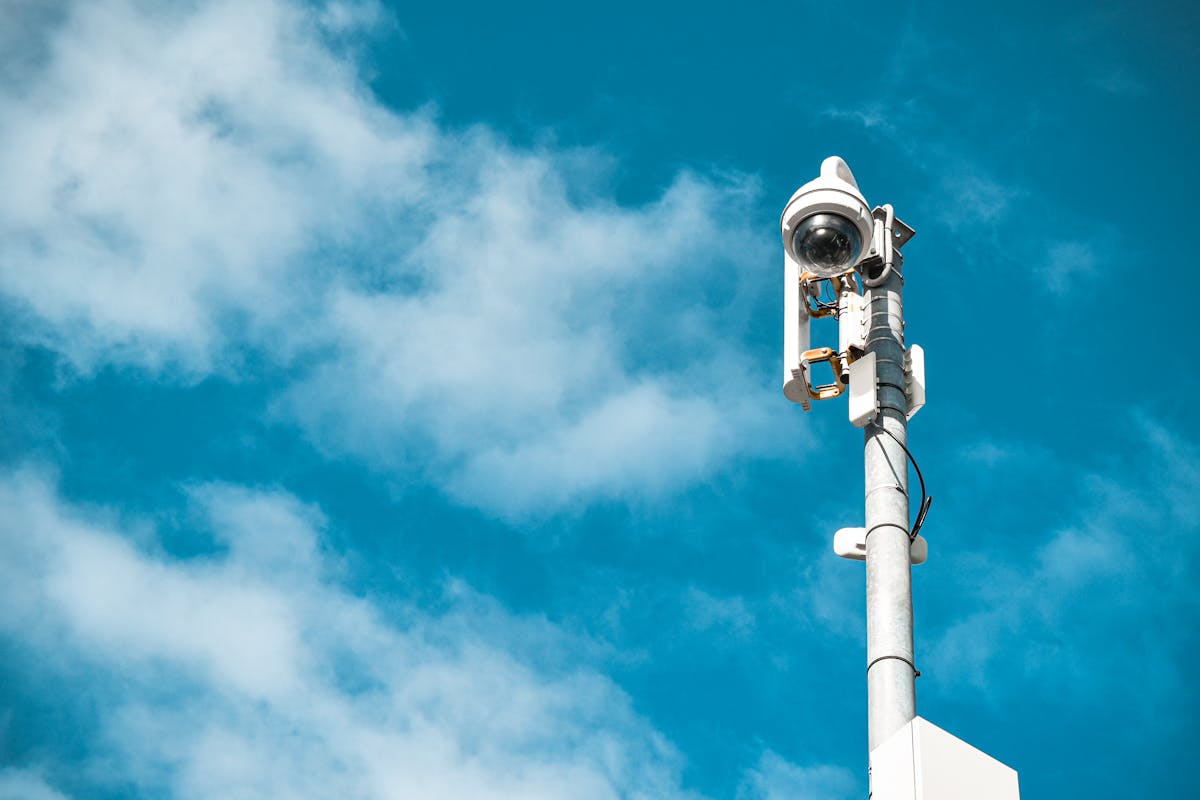

Construction site security camera installation protects heavy equipment, raw materials, and tools from theft through temporary, rapidly deployable surveillance systems designed for harsh outdoor environments, changing site layouts, and locations without permanent power or internet infrastructure. The National Equipment Register estimates that construction equipment theft costs the U.S. industry $300 million to $1 billion annually, with recovery rates below 25% for stolen machinery. A typical active construction site requires 4–12 cameras powered by solar panels or portable generators, connected via cellular LTE/5G networks, and mounted on portable poles or trailer-based platforms that relocate as the project progresses. Professional construction site camera systems feature ruggedized IP67-rated housings, extreme temperature tolerance from -40F to 140F, and remote monitoring capabilities that allow project managers and security teams to view live feeds from any location. Construction companies that deploy professional camera systems reduce equipment theft by up to 70%, lower insurance premiums by 10–20%, and create time-lapse documentation that supports project management, dispute resolution, and regulatory compliance.
Why Construction Sites Need Security Cameras
Top Security Risks for Construction Sites
Construction sites present a uniquely vulnerable security profile due to open perimeters, high-value portable assets, and limited on-site personnel during nights and weekends.
- Heavy equipment theft — Excavators, skid steers, generators, and compressors are frequently stolen from unattended sites, with average losses of $30,000–$150,000 per piece of equipment.
- Tool and material theft — Copper wiring, lumber, power tools, and fixtures disappear from job sites at rates that cost contractors 1–5% of total project budgets.
- Vandalism and arson — Unmonitored construction sites attract vandalism that damages partially completed structures, heavy equipment, and temporary utilities.
- Trespassing and liability exposure — Unauthorized individuals entering active construction zones face injury risks that generate premises liability claims against the contractor and property owner.
- Internal theft by workers or subcontractors — Materials and tools leaving the site in personal vehicles represent a persistent loss category that escalates on projects with multiple subcontractor crews.
- Safety violation documentation — OSHA citations averaging $15,625 per serious violation require documented evidence for appeals, and camera footage provides objective records of site conditions.
- Progress disputes — Disagreements between owners, general contractors, and subcontractors over work completed, timelines, and change orders benefit from time-stamped visual documentation.
Crime Statistics Affecting Construction Sites
Construction site theft ranks among the costliest property crimes in the commercial sector. The National Insurance Crime Bureau reports that construction equipment theft results in $300 million to $1 billion in annual losses across the United States. Only 20–25% of stolen construction equipment is ever recovered, compared to 50–60% recovery rates for stolen vehicles. Copper theft alone costs the construction industry an estimated $1 billion per year according to the Department of Energy. Job site burglaries peak during weekends, holidays, and overnight hours when sites are unattended, with Friday evening through Monday morning representing the highest-risk window for most projects.
How Cameras Address These Specific Threats
Construction site cameras function as force multipliers for security teams that cannot physically patrol every project site 24/7. Solar-powered cameras with cellular connectivity operate independently of site utility infrastructure, deploying on day one before power and internet are established. Motion-activated recording with instant push alerts notifies project managers and remote monitoring centers of after-hours intrusion in real time. Visible camera installations at site perimeters deter casual trespassing and opportunistic theft. Time-lapse recording creates a continuous visual record of construction progress that resolves disputes over work completed, material deliveries received, and weather-related delays. Thermal detection cameras identify human-sized heat signatures approaching the site perimeter after hours, triggering two-way audio warnings before an intrusion occurs.
Best Security Camera Types for Construction Sites
| Area to Cover | Recommended Camera | Resolution | Key Feature |
|---|---|---|---|
| Equipment staging area | Solar-powered bullet camera | 4K (8 MP) | Solar/battery power, 4G LTE connectivity |
| Site perimeter / fence line | PTZ camera on portable mast | 4K (8 MP) | 360-degree patrol, 200 ft IR, auto-tracking |
| Material storage / laydown yard | Bullet camera with IR | 2K–4K | 150 ft night vision, IP67 weatherproof |
| Entry/exit gate | LPR camera | 2 MP specialized | License plate capture for vehicle logging |
| Building interior (in-progress) | Portable dome camera | 2K (4 MP) | Battery backup, Wi-Fi mesh compatible |
| Crane / elevated overview | Fixed bullet camera | 4K (8 MP) | Time-lapse recording, extreme weather housing |
| Trailer / office area | Compact dome camera | 2K (4 MP) | PoE powered from trailer network |
Construction site cameras must withstand dust, rain, extreme temperatures, and physical impact from site activity. Cameras rated IP67 or higher with operating temperature ranges of -40F to 140F are the minimum specification for exposed outdoor construction environments. Solar panel sizing must account for regional sun hours and winter output reduction to maintain continuous operation year-round.
How Many Cameras Does a Construction Site Need?
| Site Size | Camera Count | Coverage Achieved |
|---|---|---|
| Small residential build (under 1 acre) | 2–4 | Equipment area, entry gate, material storage |
| Mid-size commercial project (1–5 acres) | 4–8 | Above + perimeter coverage, trailer area, secondary access points |
| Large commercial / infrastructure (5–20 acres) | 8–16 | Above + multiple equipment zones, building interiors, elevated overview |
| Major development / multi-phase (20+ acres) | 16–24+ | Full perimeter, zone-by-zone coverage, LPR at all access points |
Camera count on construction sites increases as the project progresses and the footprint expands. A foundation-phase residential project may need only 2 cameras, while the same project requires 4–6 cameras during framing and finish stages as materials, tools, and access points multiply. Portable mounting systems allow cameras to relocate as the active work zone shifts across the site.
Recommended Camera Placement for Construction Sites
Equipment Staging and Parking Area
Equipment staging areas require cameras that capture the full inventory of machinery, generators, and vehicles parked overnight and on weekends. A solar-powered bullet camera mounted on a 20–25 foot portable mast provides an elevated field of view covering the entire staging zone. Motion-triggered recording with cellular push alerts ensures that any vehicle or person approaching stored equipment during off-hours generates an immediate notification.
Site Perimeter and Fence Line
Perimeter cameras detect intrusion before trespassers reach valuable assets inside the site boundary. PTZ cameras on portable masts positioned at fence corners cover maximum perimeter length with automated patrol patterns. Thermal detection overlays identify human-sized heat signatures at distances of 200–500 feet, triggering alerts even in complete darkness and adverse weather where standard IR cameras lose effectiveness.
Entry and Exit Gate
Gate cameras document every vehicle and person entering and leaving the construction site. An LPR camera at the primary vehicle gate logs plate numbers automatically, creating a searchable database of all site traffic. A companion wide-angle camera captures driver and passenger identification details that the narrow-focus LPR unit does not record. Gate footage resolves disputes over delivery timing, subcontractor attendance, and unauthorized vehicle access.
Material Storage and Laydown Yard
Material storage cameras protect high-value supplies including copper wire, HVAC units, plumbing fixtures, and finish materials that are prime targets for after-hours theft. Bullet cameras with 150-foot IR night vision cover open laydown areas where materials are staged before installation. Locked storage containers benefit from a camera aimed at the container doors to document access activity throughout the workday and after hours.
Elevated Overview Position
A camera mounted on the building structure, crane, or a dedicated mast at 40–60 feet provides a full-site overview that serves dual purposes: security monitoring and construction progress documentation. Time-lapse recording from this position creates visual project timelines that support progress reports, dispute resolution, owner updates, and marketing documentation for the contractor.
Security Camera Installation Process for Construction Sites
Step 1 — Pre-Construction Site Assessment
Working with a team that provides professional installation services begins before groundbreaking with a security assessment of the site perimeter, planned access points, equipment staging areas, and utility availability. Installers evaluate cellular signal strength across the site to confirm 4G/5G connectivity for remote monitoring, assess solar exposure for panel placement, and identify optimal mast or pole positions that provide maximum coverage as the project evolves through different phases.
Step 2 — Portable Infrastructure Deployment
Construction cameras deploy on self-contained portable platforms, typically trailer-mounted mast systems or ground-anchored telescoping poles with integrated solar panels and battery banks. Each unit arrives pre-configured with cameras, cellular modems, and recording hardware, requiring no site power or internet infrastructure. Trailer-based systems set up in 2–4 hours per unit and can be relocated by a standard pickup truck as the active work zone shifts. Ground-anchored poles require concrete ballast but provide a smaller footprint for tight urban sites.
Step 3 — Network Configuration and Monitoring Setup
Cellular-connected cameras are configured for remote viewing through cloud-based platforms accessible from smartphones, tablets, and desktop browsers. Motion detection zones are tuned to avoid false alerts from construction activity during work hours while maintaining high sensitivity during off-hours. Two-way audio speakers connected to monitoring centers enable live verbal warnings to trespassers. Alert escalation rules route notifications to project managers first, then to monitoring services and local law enforcement if the intrusion is confirmed.
Step 4 — Ongoing Relocation and System Scaling
Construction site camera systems require planned relocation as the project moves through phases. Foundation, framing, mechanical, and finish stages each present different security priorities and active work zones. Professional installers schedule periodic site visits to reposition cameras, adjust coverage zones, add units for expanding site areas, and remove cameras from completed and secured building sections. Most construction camera providers include relocation services in their monthly rental agreements.
Cost of Security Camera Installation for Construction Sites
| System Tier | Camera Count | Price Range | Includes |
|---|---|---|---|
| Small site / single trailer unit | 2–4 | $300–$600/month rental | Solar-powered trailer, cameras, cellular, cloud viewing |
| Mid-size commercial project | 4–8 | $600–$1,500/month rental | Above + LPR at gate, multiple mast positions |
| Large commercial / infrastructure | 8–16 | $1,500–$3,500/month rental | Above + professional monitoring, thermal detection |
| Purchase (per camera unit) | 1 | $2,500–$6,000 one-time | Camera, solar panel, battery, cellular modem, mast mount |
Construction site cameras are most commonly deployed as monthly rentals rather than purchased systems because project timelines are finite and camera counts change as the site evolves. Rental pricing includes equipment, cellular data, cloud storage, and typically one relocation per month. Purchased systems make financial sense for contractors managing multiple simultaneous projects who can rotate units between sites. Compare overall system costs in our security camera installation cost guide.
Legal Requirements for Cameras at Construction Sites
Construction site camera systems must comply with local privacy regulations, particularly when the site is adjacent to residential properties, public sidewalks, or neighboring businesses. Cameras must be aimed exclusively at the construction site and avoid capturing footage of neighboring private property, residential windows, or public areas beyond what is necessary for site security. Signage notifying visitors, subcontractors, and delivery personnel that video surveillance is active should be posted at all site entry points. Audio recording via two-way speakers requires compliance with state wiretapping laws. OSHA regulations do not prohibit camera use on construction sites but do require that surveillance policies be disclosed to workers. Review the full regulatory landscape in our guide to security camera laws and legal requirements.
Get a Free Camera Installation Quote for Your Construction Site
Construction site security camera costs depend on site acreage, project duration, cellular connectivity, and the number of access points and staging areas requiring coverage. Our construction security specialists perform free site assessments, evaluate your project’s specific risk profile, and recommend a camera deployment plan with transparent monthly rental or purchase pricing. Contact us today to schedule your free construction site security consultation and receive a custom proposal within 48 hours.
Choosing Between Wired and Wireless for Construction Sites
Wireless cellular-connected cameras are the standard and recommended technology for construction site surveillance because job sites lack permanent power, internet, and cable infrastructure during most project phases. Solar-powered cameras with 4G/5G cellular modems operate completely off-grid, deploying on day one without waiting for utility connections. Wired PoE systems become viable only after permanent electrical and network infrastructure is installed in the building, typically during the mechanical and finish phases. Hybrid approaches use wireless cameras for site perimeter and equipment areas while connecting interior cameras to the building’s PoE network once it is operational. Review the full comparison in our wired vs. wireless security camera comparison.
Complete Security Checklist for Construction Sites
A comprehensive construction site security plan combines camera surveillance with physical barriers, lighting, access control, and asset tracking. Perimeter fencing, locked storage containers, equipment GPS trackers, and security guard patrols complement camera coverage to create layered protection against different threat types. Tool inventory systems, daily sign-in logs, and subcontractor access policies address internal theft risks that cameras alone cannot prevent. Review our complete small business security guide for a full construction site security framework.